
Cursed words
The power of intention

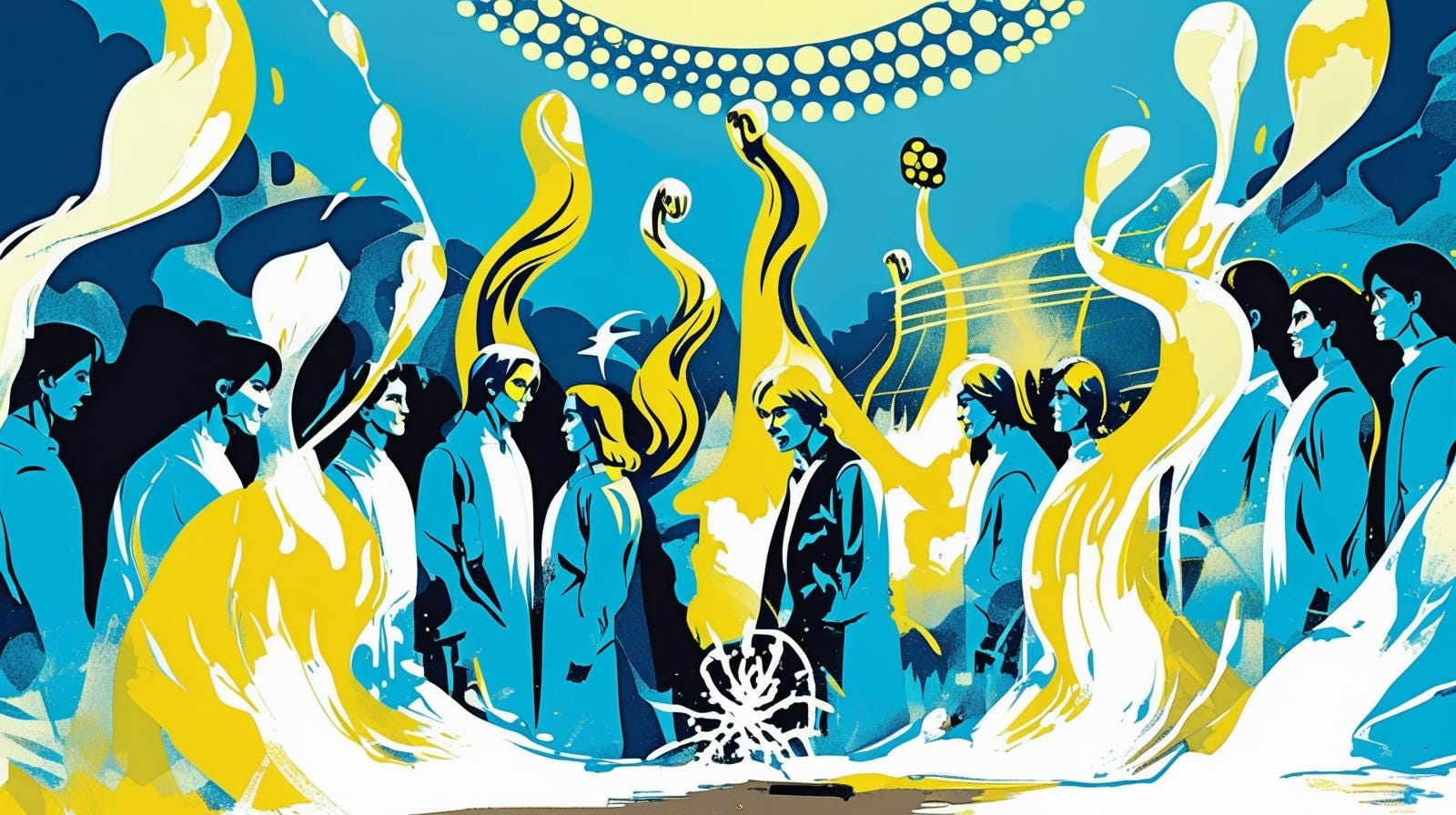
Throughout history, identity has been a deeply spiritual matter, often manipulated by external forces for social, political, or religious purposes. Today, it is troubling to witness how quickly, casually, and dangerously people adopt identities disconnected from the Most High God.
Years ago, there was a sci-fi show on a popular streaming platform about a secret organization on a university campus. Members of this organization performed various rituals and incantations. A new professor was hired at the school, which had no affiliation with the organization but was aware of its existence. What I found fascinating was that this professor, without being a member of this organization, figured out how to set such a strong intention that a word like “gummy bear” or “jelly bean” could cause an explosion.
Think about that.
Anyone in proximity could recall hearing someone say “gummy bear” or “jelly bean.” Still, the listener’s understanding, and anyone familiar with gummy bears or jelly beans, would never think to associate these sugary confections with an explosion.
The reminder of this show inspired me to be more present in conversation, to REALLY listen. For example, what followed when someone said: “I am…”
As of May 2026, the United States of America is embroiled in an on-again-off-again skirmish in Iran. As a result, there has been an increase in propaganda content on social media.
Some people identify as white, saying one thing, people who identify as black say another thing, people who identify as biracial, brown, or yellow say other things.
Then I remembered the gummy bears and jelly beans.
Color became a signal for something beyond itself.
People have identified with color while underestimating the impact that doing so signaled.
The first documented attack on identity in God was in the Garden of Eden when the serpent convinced Eve to question her understanding and identity.
In the 17th century, when the transatlantic slave trade was at its peak, Dahomey, modern day Benin, there was the ‘Tree of Forgetfulness’, where the kings of Dahomey believed that if the slaves marched around the tree (women seven times and men nine), they would forget all ties to their homeland and thus never return; the mass grave memorial and nearby ‘tree of no return’ that the kings planted as an anchor for returning spirits out of concern that slaves who died at sea would return to seek vengeance. Over two centuries, more than one million African captives were exported from Ouidah, the slave trading post in Dahomey.
The people of Dahomey practiced Vodun and maintained a Temple of Pythons, with a pit filled with royal pythons. The serpents are an important religious symbol and are believed to protect Vodun followers.
Irony?
In 1705, the Virginia House of Burgesses established a rigid racial caste system through the Virginia Slave Codes in the United States.
Essentially, “White” was synonymous with power, the apex predator, and rule-making. “Black” signaled undesirable, injustice, and perpetual victimhood. “Biracial,” “Brown,” and “Yellow” were synonymous with safety, neutrality, and access.
In reality, all who strongly identify with these categories also take on their curses.
Those who coined these identities also intended that “White” signaled violence, subjugation, and the violation of the wills of others. “Black” was synonymous with resilience and rebellion. “Brown” and “Yellow” signaled silent suffering and vengeance.
If an incantation and ritual could be used to separate enslaved people from their ancestry and sense of self for centuries, what does that say about these categories?
Proverbs 18:21 notes that “death and life are in the power of the tongue.”
Throughout the Bible, the covenant people were warned against adopting the customs and identities of neighboring groups. These other groups carved statues and bowed to them. They sacrificed their children to them (2 Kings 16:3). They poured libations and presented offerings to them (Jeremiah 7:18 and Jeremiah 44:17-19). The moment they identified with the cursed idols, they began to exhibit cursed behaviors and have cursed circumstances, as seen in:
Generational Repercussions (Exodus 20:4-6)
The Golden Calf (Exodus 32)
The Baal of Peor (Numbers 25)
Solomon’s Apostasy (1 Kings 11)
King Manasseh (2 Kings 21)
The beauty of free will is that with new information, we can do new things. We can make different choices and correct our course.
Choose ye this day who you will serve.
Will you choose to hang on to identities that were created to harm? Or will you step into your place as a rightful heir in the Kingdom of God?
Dear God,
Thank You that my true identity is restored! Thank You that I am more discerning about what I choose to identify as or with. Thank You for Your immense grace and mercy, by which I am restored to who You created me to be. Thank You that I am redeemed.
In Your Holy and matchless Name, Amen.