
The Sword
Foresight and accountability.

Though we are forgiven our sins through the sacrifice of Jesus Christ, we are admonished to turn away from evil and our past trauma and mistakes. God lovingly keeps us accountable.
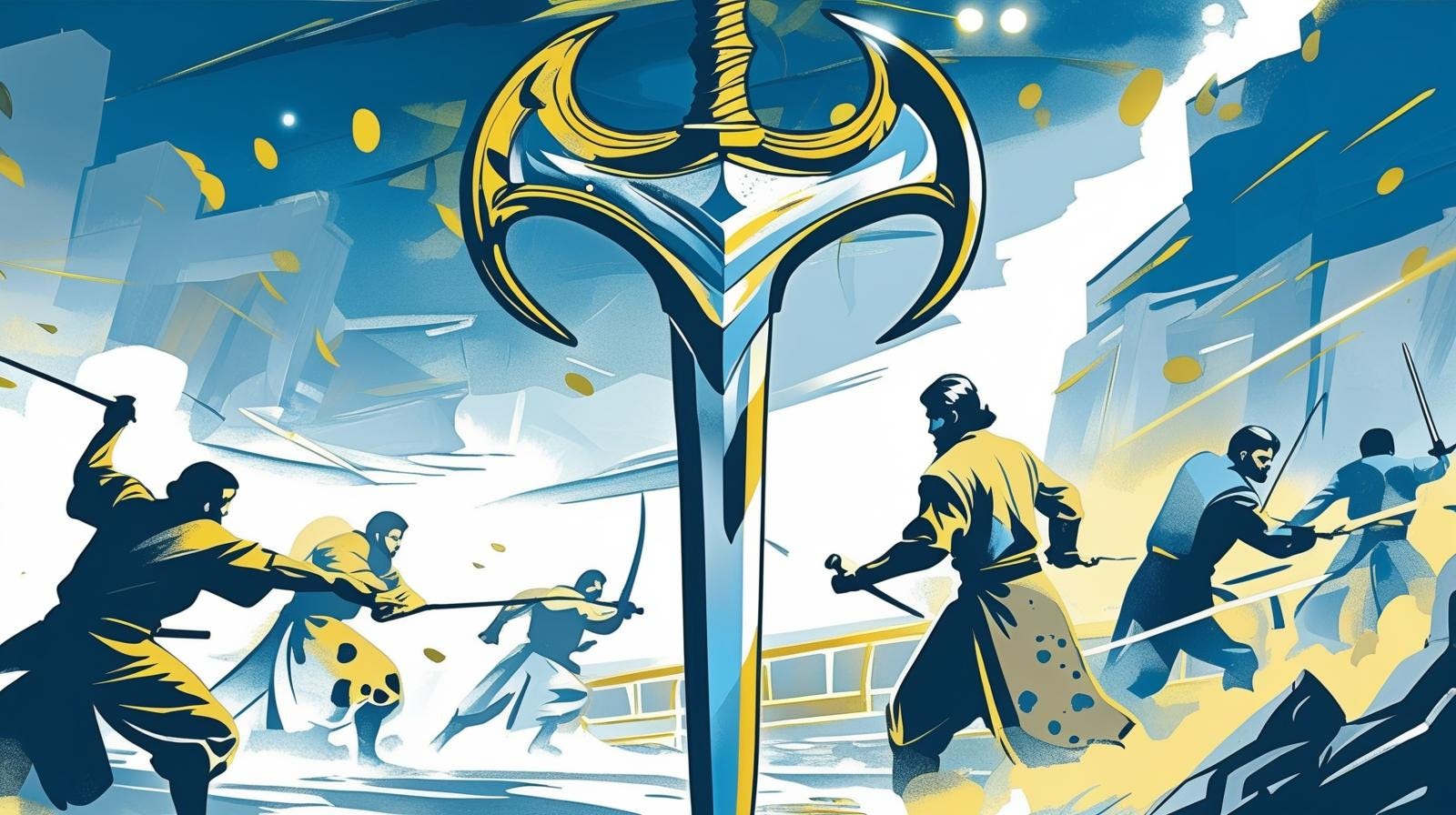
The theme of the sword first appears in 2 Samuel 2:18-28, where Abner and Joab illustrate a lesson on the contrast between narrow thinking and a broader vision.
Abner and Joab | 2 Samuel 2:18-28
26 Abner called out to Joab, “Must the sword devour forever? Don’t you realize that this will end in bitterness? How long before you order your men to stop pursuing their fellow Israelites?”
27 Joab answered, “As surely as God lives, if you had not spoken, the men would have continued pursuing them until morning.”
28 So Joab blew the trumpet, and all the troops came to a halt; they no longer pursued Israel, nor did they fight anymore.
Though the young Israelite men were determined to win or give up their lives, there is no victory in death unless it is for a righteous cause. Abner, being more mature, saw the bigger picture — they were sacrificing themselves on the altar of violence and feeding the sword their blood.
Some time ago, I heard a pastor share that the sword would never leave King David’s house.
2 Samuel 12:10 teaches that though God forgave King David and would bless his future generations, King David was still held accountable for causing the murder of a man to hide his intimacy with the man’s wife and the child they conceived by ensuring the sword would not depart from his house while he was alive.
What does this mean?
King David took the life of a righteous man without cause, which led to his fighting war after war and his sons turning against each other. However, God was faithful in his promise of the blessing of peace for the next generation. King Solomon, the son of King David, went on to live peacefully and prosperously.
Let’s go deeper.
It takes humility to honestly acknowledge where we fell short and a willingness to endure the consequences.
It is worth noting that all choices have consequences, but not all consequences are harmful; some have long-term benefits. For example, the short-term consequence of exercise could be soreness, but the long-term result is improved health and mobility.
As we mature in our understanding, we see the residual effects of impulsive choices.
In the story of Abner and Joab, this juxtaposition of maturity was highlighted in the way that Abner saw beyond the perceived gratification of victory against opponents and saw that he was shedding the blood of his fellow tribespeople.
Choices have consequences, so let us walk in foresight and discernment.
Dear God,
Thank You for foresight and accountability. I repent for any time I have been impulsive to my detriment or the detriment of others. I lay every fear, every worry, every impulse outside of Your will and way at the foot of Your throne and surrender to You. Increase my foresight and wisdom to understand long-term benefits and consequences. Thank You for Your grace and mercy.
In Your Holy Name, Amen.